
The Get That Pro Sound Ultimate Guide to Reverb Ebook Available Now>>

UPDATED FOR 2019: With a range of great new reverb plugins from various manufacturers released since our last update, we thought it was definitely time to bring you a fully updated and definitive list of the very best reverb plugins available in 2019.
The very best reverb plugins for every style and price range are here, including the best free plugins, classic emulations, and algorithmic and convolution models.
To make this list the most useful and comprehensive for you, we’ve broken our selections down into ten broad categories, and provided plenty of alternative choices for each category. This way, you should have everything you need to build your ideal reverb plugin arsenal with the minimum of fuss, and give you some ideas for experimenting – all so that you can get on with making great, expressive music, which is after all the real point!
Why Is Selecting Reverb Important For A Good Mix?
A lot of mixes stand or fall on their use of reverb – the process is used to give the impression of sounds being in a real acoustic space, providing your mix with front-to-back depth, and is often referred to as the ‘glue’ binding all the different parts of a mix into a coherent whole. Using just enough reverb to do these jobs, without overdoing it and turning your track to sonic mush, is one of the major components of a professional-sounding mix.
But, as we’ve said before, not all reverb plugins are created equal. Different types of reverbs are good for different applications, so it’s unlikely that you’ll want to use the same plugin for everything. You might want to use a plate reverb for drums, and a high-grade convolution reverb for strings or background ambience. Often, you don’t want the most ‘natural’ sounding reverb – you want to add a particular colouration to the sound, and that’s why there are so many variations on this vital effect.
Adding to this idea, most of us have grown up listening to music processed with rather artificial-sounding spring, plate and digital reverbs, and those sounds are ingrained in our subconscious as musically appropriate – it’s what we’re used to hearing. So don’t sweat about ‘realism’ too much.
Before we get to the Best 10 selections, check out this quick primer on the key aspects and features that apply to all reverb plugins:
Reverb: A Pocket History
Ever wondered what all the preset names on reverb plugins actually refer to?
Room / Hall / Chamber: The first reverb effects used for recorded music were created with echo chambers – a loudspeaker would play the sound back in the chamber, and a microphone would pick it up again, including the echo of the room itself. The same principle still applies for simulated ‘room’ and ‘hall’ reverbs -you’re capturing the ambience of a particularly sized and shaped space.
Plate: Next came plate reverb with the EMT 140 in 1957. Used a lot in the ‘60s and ‘70s, plate reverbs use a transducer to create vibrations across a large ‘plate’ of sheet metal. A pickup captures the vibrations as they bounce across the plate, and the result is output again as an audio signal. Plate reverb tends to be bright and clean-sounding, and it holds a special place in many producers hearts.
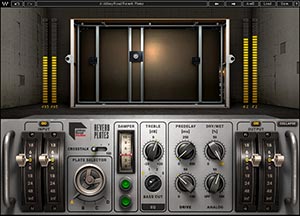
Waves Abbey Road Reverb Plates features both a control panel and a graphic representation of the reverb plate itself in it’s casing
Spring: Uses a similar principle to that of plate reverb, but with a metal spring instead of a plate. A transducer at one end and a pickup at the other are used to create and then capture vibrations within the spring. Being compact and relatively cheap to manufacture, many guitar amp designs ended up incorporating a spring reverb unit. Spring reverb adds a distinctive metallic colouration to the sound, and in the days of classic rock ‘n’ roll it was known that you could shake the reverb cabinet while recording so that the springs clashed together for a properly unhinged sound. We wouldn’t recommend attempting this with a plugin version though :)
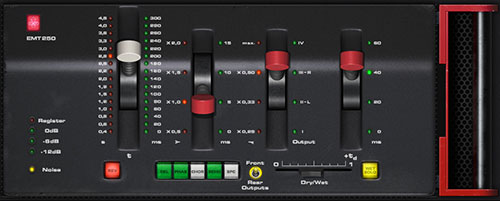
The UAD EMT 250 plugin faithfully models the levers of the original hardware, allowing you to control your reverb in the same way as you might fire the Death Star.
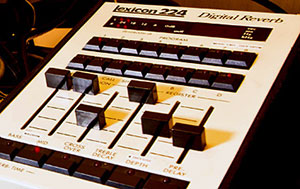
Digital: EMT built on the popularity of the EMT 140 plate reverb with another world first in 1976: the EMT 250 digital reverb unit. However, it was the arrival of the Lexicon 224 a couple of years later, followed up by the 480L in 1986, that took digital reverb into virtually every professional studio, and it’s the Lexicon name – and sound – which is now cemented in our minds as the archetypal digital reverb of the 1980s. Since then, we’ve also seen many highly-regarded and much-loved digital reverb units and guitar reverb effects boxes from the likes of Eventide, TC Electronic and Yamaha, such as the Eventide Space pedal, TC Electronic Reverb 4000 and most recently, the Bricasti M7 rack unit. Meanwhile, the awesome Strymon Big Sky has virtually taken over the world of guitar reverb, as well as finding favour with a lot of synth players and live electronic performers.
The Difference Between Algorithmic And Convolution Reverb
Almost all reverb plugins (as well as hardware digital reverb units) use one of these two digital processing methods.
Algorithmic reverbs use calculations based on hypothetical rooms and other spaces to generate their reverb sounds. Generally this gives a sharper, more artificial sound, typified by most hardware digital reverbs of the last 30 years. This is not necessarily a bad thing though – as mentioned above, musically we’re not always after the most ‘natural’ sound, but the one that has the right ‘character’ for the track. Algorithmic reverbs also tend to be far lighter on the computer’s CPU than convolution reverb processing.
Convolution reverbs use pre-recorded samples of real rooms and spaces to build Impulse Response (IR) files of those spaces. The impulse response is then ‘convolved’ with the incoming audio signal you want to process, hence the name.
Convolution reverbs then, are generally far better at simulating real spaces than algorithmic reverbs – the downsides are that they also require significantly more CPU processing power to work, so you are more limited in terms of the number of instances of the plugin you can run simultaneously, and they often require a bit more work than algorithmic reverb to sit comfortably in a mix.
Recent Developments: Emulations & Future Reverb
In recent years, we’ve seen a surge in the popularity and innovation going into a new generation of algorithmic reverbs, often based to a greater or lesser extent on the Lexicon 224 and 480 digital hardware units as a gold standard. We’re also seeing progressively more accurate and accessible plate reverb emulations, often using the EMT 140 plate as the benchmark for having the most legendary mechanical plate reverb sound.
Happily though, it’s not all copies of hardware: we’re also starting to see a greater range of more unusual and forward-thinking reverb plugins, led by 2CAudio’s Aether and the Valhalla DSP range, and joined more recently by a new wave of next-generation reverb plugins such as Waves H-Reverb, fabfilter’s Pro-R, LiquidSonics’ Seventh Heaven, Brainworx BX_rooMS and the Exponential Audio range (which has now been acquired by iZotope). With these, premium sound quality is a given and the focus for new and improved designs is now as much on usability, a fast and smooth workflow, and cleverly-implemented visual representations of the effect as you adjust the controls, so that you can sculpt your ambience with new levels of speed, precision and detail.
We’ve taken all these developments into account with our list below, check it out.
The 10 Best Reverb Plugins – The List
So now we know that choosing the right plugins for each job is crucial, and we’ve covered the basic differences between the types. Here’s our rundown of what we consider to be the very best reverb plugins, whatever your price range.
As before, we’ve covered every type of reverb and all price ranges with the categories, and included plenty of alternative choices for each category. There’s definitely something for everyone here.
Don’t forget: In the end, ‘best’ is highly subjective when it comes to reverb – there is a lot of choice out there, and picking a personal favourite is literally a lot like choosing a favourite colour.
1) Best Free Reverb:
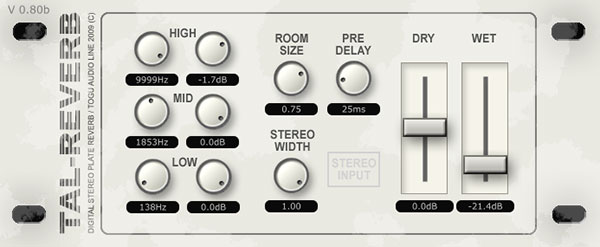
Togu Audio Line TAL-Reverb-II
The second iteration of TAL’s popular free reverb plugin, TAL-Reverb-II combines a classic plate reverb algorithm with a 3-band EQ section to allow you to sculpt the frequencies and colour of the reverb tail. With an attractive interface and just the right number of options for both quickly finding decent working settings and making a few finer adjustments, TAL-Reverb-II is a great reverb plugin for beginners or those simply looking to expand their existing reverb options.
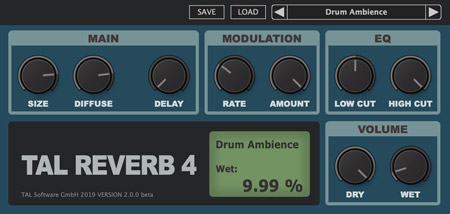
We must also mention the TAL-Reverb-III, another free plate reverb plugin that strips the controls down further to a series of sliders, and the TAL-Reverb-4 which is a free standalone version of the reverb section from the TAL-Sampler plugin. Both of these are of course worth checking out, but to our mind the TAL-Reverb-II strikes the best balance of sound and control out of the bunch. More info and download here.
Also check out:
 Our previous top choice in this category was the Variety Of Sound EpicVerb, and if you’re a fan of their other fantastic free plugins this should certainly find a place in your collection.
Smartelectronix Ambience is still a popular choice as one of the best freeware algorithmic reverbs.
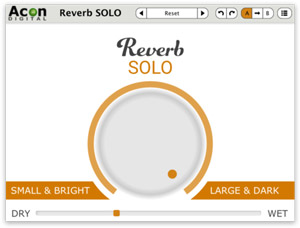 We also have music gear marketplace site Reverb.com‘s collab with Acon Digital, free plugin Reverb Solo. This single-knob plugin is great for quickly throwing on fx chains and demo sounds, allowing you to get a reverb atmosphere going without getting bogged down in the minutae of settings. As ever, less is often more!
Voxengo OldSkoolVerb delivers a nice classic stereo reverb sound, and is kept continually updated as a free plugin staple. The latest version comes in 5 colour variants too, so if you get tired of looking at the same GUIs all the time, you can shade your reverb plugin instances for mood or colour-code for different instruments in a mix project. Recommended.
 We must also mention the free convolution reverb plugin, LiquidSonics Reverberate LE. More on convolution reverbs below.
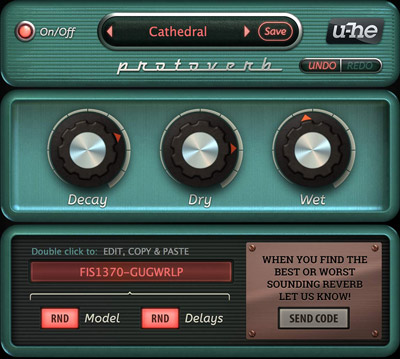
Finally in this section, u-he’s Protoverb is an “experimental researchware reverb”, developed as an off-shoot of the u-he teams ongoing sonic explorations while developing their many best-in-class synth and effect plugins such as Diva and the Color Copy delay.
2) Best Convolution Reverb:
Audio Ease Altiverb 7
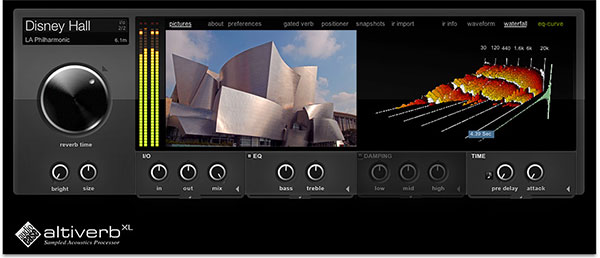
The established industry standard convolution reverb plugin. Convolution reverb uses Impulse Response (IR) files that contain the recorded reverberation characteristics of any space, from the inside of an oil drum to the Sydney Opera House, and applies those characteristics to the source material. A large part of what makes Altiverb so special is the attention to detail and the time and trouble taken by the Audio Ease team to put together the vast Altiverb IR library. Users also get access to new Impulse Responses as they are made available each month on the Audio Ease website.
The XL version also includes 5.1 surround reverb support and a TDM version for Pro Tools.
Available for MacOS: VST | AU | AAX | MAS | RTAS, and Windows: VST | AAX | RTAS.
BUY NOW via Amazon.Alternatively:
LiquidSonics’ Seventh Heaven uses convolution impulse response technology to recreate the presets of the hardware Bricasti M7, a coveted high-end digital reverb unit in studio production circles. The M7 is pricey, but LiquidSonics plugin can be had for a great deal less, without sacrificing the pristine and highly musical characteristics of it’s inspiration. More on Seventh Heaven in the “Best Algorithmic/Digital Hardware Reverb Emulation” section at number 6, below.
Two other plugins use convolution modeling slightly differently, to recreate the acoustic qualities of a specific studio space and a very particular miking technique, respectively. Universal Audio’s UAD Ocean Way Studio let’s you process your sounds as though they were being played inside the famous Ocean Way Recordings’ Studio A or Studio B. Using a mix of room modeling and virtual mic placement, you can achieve a broad range of acoustic atmospheres, from noticeable “reverb” to infinite degrees of ambient subtlety. 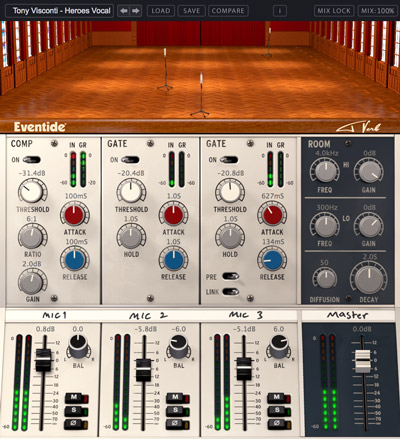 Eventide’s Tverb, on the other hand, was developed in collaboration with producer Tony Visconti and recreates the unusual and innovative triple-microphone placement and gate processing setup that he used to capture the iconic vocal performance on David Bowie’s Heroes in 1977. As you would expect from Eventide, the results can range all the way from pretty and lush reverbs to much more mangled, chopped and overtly processed effects with the flick of a few dials. Recommended!
Also check out:
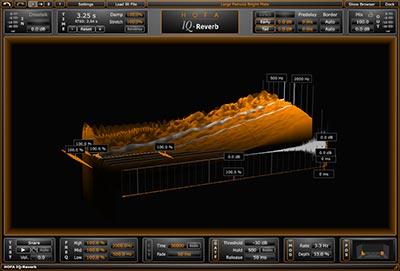 HOFA Plugins IQ-Reverb sounds similarly fantastic to Altiverb and is a convolution reverb that can be controlled much like one of the classic algorithmic hardware units that it replicates with it’s IR library. IQ-Reverb has some great features in terms of how you can manipulate the IR files by reversing, time-stretching etc. and includes a Position control where you can place the sound in left/right and front/back space. It doesn’t have as comprehensive a library of IRs as Altiverb, but you can import 3rd-party IR files so this won’t be a problem for any but the most demanding professional users. The real-time graphic representation is a cool and inspiring touch, although it can be a little heavy on computing resources as it redraws. Recommended.
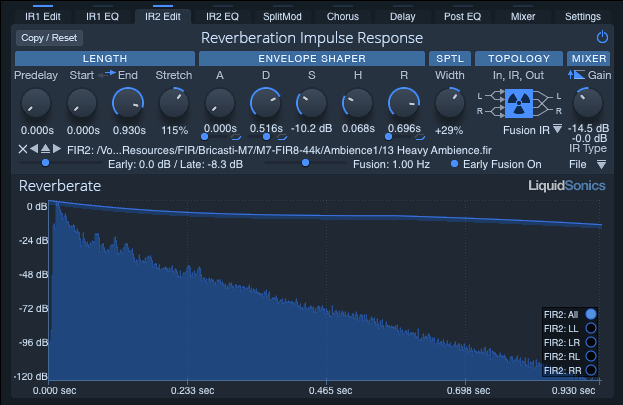 Some other top contenders are Waves IR-1, LiquidSonics Reverberate 2 and the free version Reverberate LE, and SIR Audio Tools SIR3.
There are plenty of great options now for experimenting with convolution reverb and Impulse Response files, including plugins from the standard libraries of many of the major DAWs. Special mention here must go to Logic Pro Space Designer, FL Studio Convolver, Convolution Reverb Pro in Ableton Live and Reaper Reaverb.
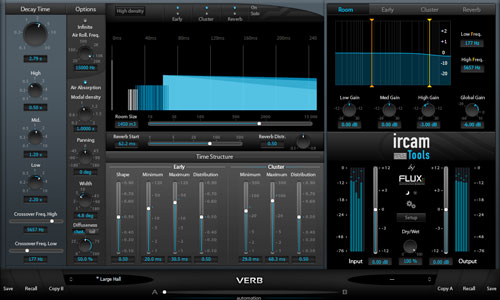 While not technically a convolution reverb, Flux Ircam Verb V3 (and it’s streamlined Session version) is an algorithmic reverb that is designed to recreate real acoustic conditions with a convolution-style of accuracy. Going beyond the typical early and late reflections calculations of most algorithmic reverbs, this one includes an additional cluster parameter that determines what happens between the early reflections and conventional reverb tail. The result of a full 10 years of research by the Acoustic and Cognitive Spaces Team at the IRCAM R&D centre (next door to the Pompidou Centre in Paris), this is well worth checking out for sound designers, studio pros, and general reverb uber-nerds alike.
3) Best Reverb For Sound Design & FX:
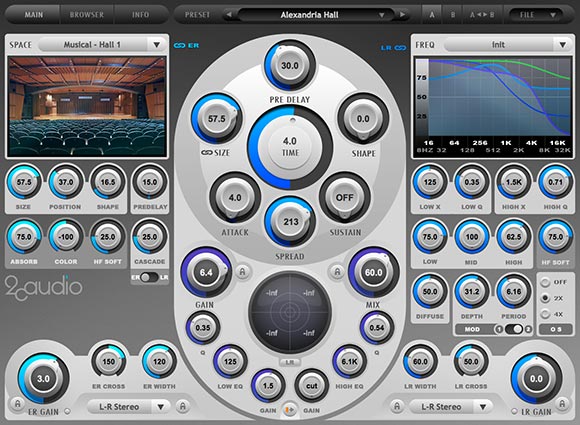
2CAudio Aether
Aether is the game sound designers algorithmic reverb plugin. It was 2CAudio’s debut plugin in 2009 and essentially set a new benchmark, being unmatched in terms of audio quality, scope and usability. Yes, it looks relatively complex and isn’t necessarily going to be a first choice for quickly setting up basic reverb sends for a typical mix (although of course it can do that with bells on). Where Aether really comes into it’s own is as the ultimate reverb for dramatically enhancing sound design, ambience and spot FX: hits, cinematic booms, club track-style swirls of shifting reverb clouds that can add a lot of extra movement, vibe and overall epic-ness to a track.
We must also mention the other two reverb plugins in the 2CAudio’s range, B2 and Breeze. B2 is a dual reverb and another interesting and top quality variation, using the expertise they’ve honed with Aether; while Breeze presents the same audio processing quality but in a streamlined format for simpler applications of reverb and a smaller CPU footprint. As a trio, these plugins complement each other perfectly, covering every ambience base.
More info here.
Alternatively:
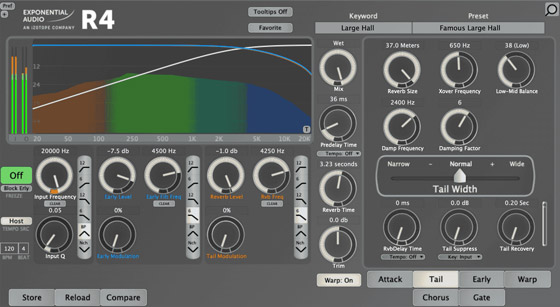 iZotope / Exponential Audio R4 is a pristine reverb that can do it all, a true next-gen hybrid. From lush smooth tails that bring to mind the favourite hardware reverb units of old, to sonic mangling with the Warp and Freeze controls for spectacularly impossible reflection effects, R4 covers every base. And now that Exponential has been acquired by iZotope, expect some next-level developments in this space soon too.
With Brainworx bx_rooMS, you get mid-side processing built into a high-quality reverb plugin. For sound design, plus detailed mixing and mastering duties, you may find the depth of control you get from bx_rooMS to be exactly what you need.
Also check out:
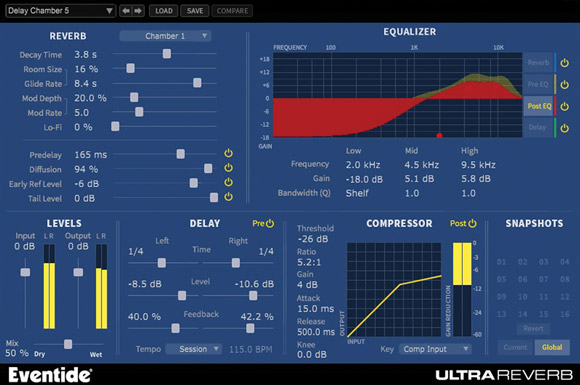 For a great mix of gritty ambience and sonic angling potential, take a good look at the range of reverb processors in Eventides lineup. UltraReverb has become one of my absolute go-to personal favourite reverb plugins over the last 18 months or so, as it pairs its reverb with delay, EQ and compression all within the same nicely-designed GUI, providing plenty of on-the-fly inspiration for everything from short percussion ambience to full on compressed-reversed warping weirdness (in part, courtesy of Richard Devine and Sasha co-producer Charlie May who both provided a bunch of the excellent presets, amongst many others).
Eventide’s Blackhole plugin is based in part on the companies own hardware processors and Space reverb guitar pedal. It’s another great choice for sound design and spontaneous effects creation, with a ribbon strip for super-easy real-time morphing between different reverb settings. Best reverb for live performance/DJing, anyone?!
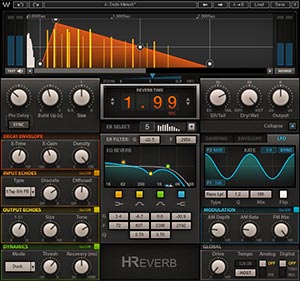 The last addition to Waves‘ excellent “Hybrid” series of plugins is Waves H-Reverb, which specialises in versatility and speed, always critical attributes when you’re working on more out-there ideas and wanting to try out different and /or extreme changes in sound quickly and easily.
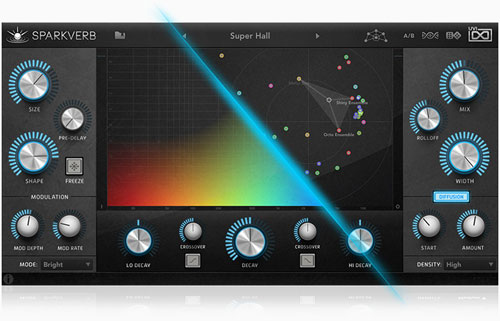
UVI SparkVerb features a cool coloured frequency graph that illustrates which areas of the frequency spectrum will generate reverb from the sound being processed. Independent Hi and Lo Decay controls allow you to set different reverb tail lengths for high and low frequencies, and through one of the three core algorithms – Lo-Fi, Bright and Dark – you can introduce a range of subtle modulations to further colour and characterize the reverb ambience. You can also select presets with SparkVerb’s Preset Voyager window, which gives you a constellation of potential reverb settings laid out over a navigation-style grid. Overall a great combination of sound and interface design, and very nice to use.
Valhalla Shimmer is an obvious candidate whenever you’re looking to achieve huge, enveloping, quality reverb ambience. The new-look eaReckon EAReverb 2 is another reverb that also offers something different to the norm with style and flexibility.
4) Best Bundled / Series Reverb:
FabFilter Pro-R
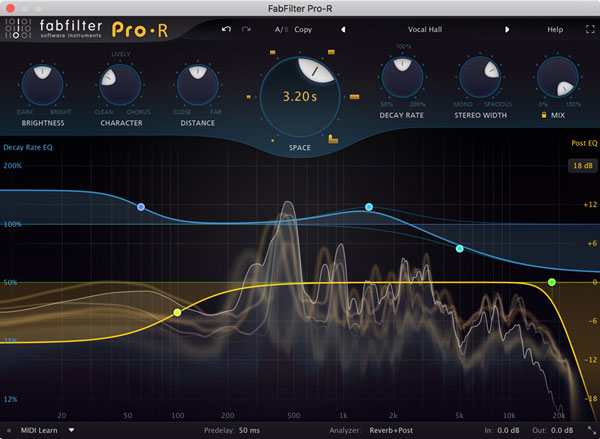
Some of the most useful reverbs are a part of bundles or series of plugins that work really well together or share common features and workflows. FabFilter’s Pro-R is certainly on of these, featuring the by-now familiar format of an animated waveform graph (that doubles as a very useful spectrum analyser for making precise adjustments), over which you can create as many nodes as you need on the coloured frequency and reverb parameter curves to shape the effect with a level of efficiency and elegance that can make other interfaces feel a bit clunky by comparison. Highly recommended, especially if you’re familiar with other FabFilter plugins – and an ideal introduction if you’re not.
BUY NOW via Plugin Boutique.Also check out:
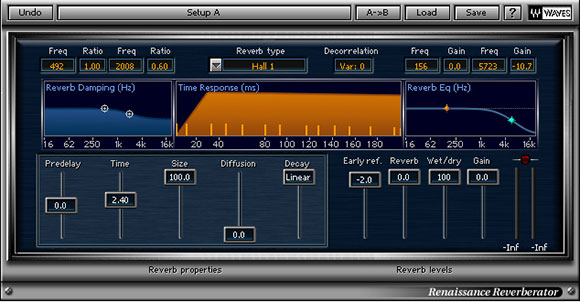 Waves offer a range of streamlined and/or specialised reverb plugins throughout their various bundles. A former favourite on this list, Waves Renaissance Reverb obviously still holds up sonically and in terms of CPU hit, and some may prefer it’s no-nonsense interface to the flashier upstarts mentioned above. A well balanced reverb in terms of overall sound, versatility and interface/usability, with simple but effective graphic EQs for quick shaping of the reverb return signal – great for efficiently slotting the sound into a busy mix without adding clutter or low-frequency mush.
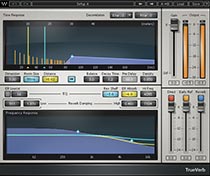 Waves TrueVerb is more of a room emulator than a conventional reverb like the Renaissance Reverb. Together, they’re an excellent combination.
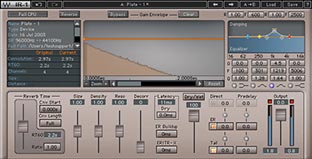
Waves IR1 is a convolution reverb, with some great presets that are based on many famous venues and spaces from around the world. So if you want to hear what your music would sound like in the Sydney Opera House or at legendary NY punk rock club CBGBs, this is the reverb for you.
As far as we know, the IR1 is also unique for it’s parametric controls, whereby you can plot your settings on the interface display in the same way as you would on a parametric EQ.
The IK Multimedia Classik Studio Reverb (‘CSR’) bundle is a one-stop reverb shop for many producers and guitar players, featuring four reverb plugins, covering Plate, Hall, Room and Inverse types. Each module can work in either Easy of Advanced mode: Easy for when you just want to get something down fast with the minimum of fuss; Advanced when you want to spend more time finessing the perfect sound. Which of course also means it’s perfect for beginners, who can gradually get to grips with the more advanced parameters at their own pace.
Sonnox Oxford Reverb is included in the high-end and highly regarded Sonnox (or “Sony Oxford”) range of mix plugins. We should also mention iZotope Ozone’s Reverb module as a solid “bundled” reverb that you could easily overlook when perusing your plugin list. Finally, Acustica Audio Nebula Pro 3.5 of course includes a range of classic reverb unit emulations within it’s expansive library.
5) Best Streamlined Reverb:
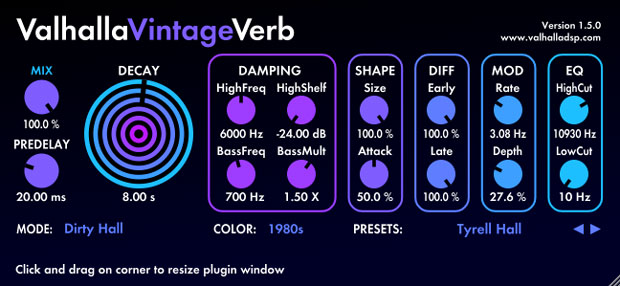
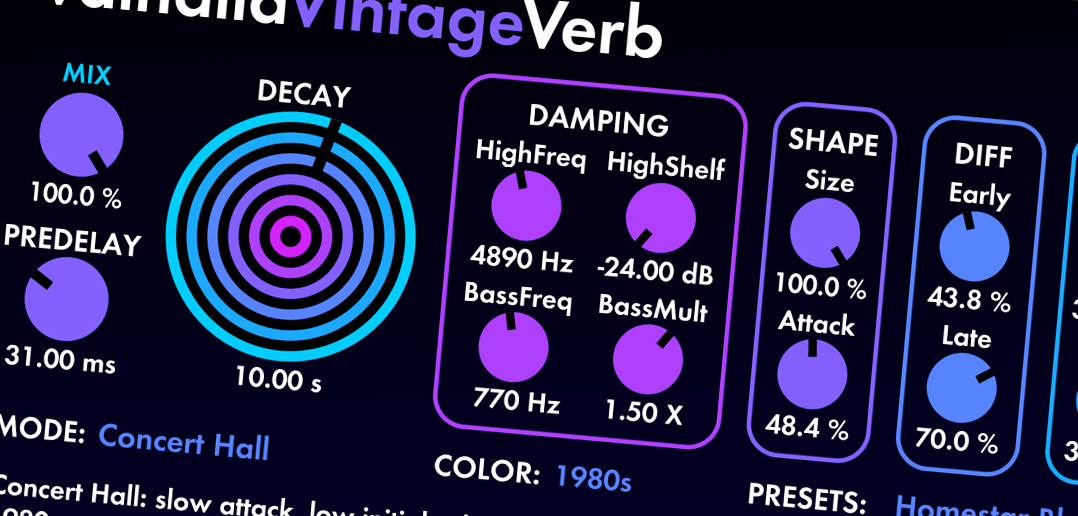
ValhallaDSP VintageVerb
Quite often you don’t need the most complex and processor-intensive plugin for mix processing tasks, and the best solution will be something that keeps the audio quality high while stripping the controls and parameters down to a well-honed essence. This sums up Valhalla’s VintageVerb, which follows up the well-regarded Room and Shimmer reverb plugins with an interface that cycles through 3 different colour schemes depending on which of the three Colour modes is selected: 1970s, 1980s, or the pleasingly specific/nonspecific “NOW”.
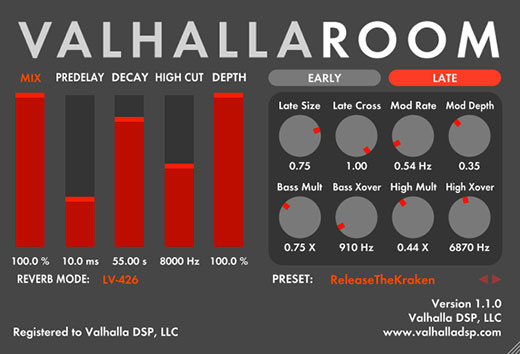 Don’t be misled by the name, VintageVerb is not a throwback but a thoroughly modern summation of all the best bits of algorithmic reverb past and present, and hits the sweet-spot between versatility, ease of use (the NASA-inspired interface designs are helpful here), value for money and sonic results at least as well as any other plugin on our list. Valhalla effects have become staples in most producers toolboxes, with good reason. More info here.
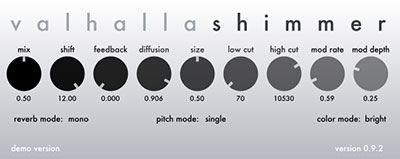 The earlier ValhallaRoom is still very versatile on it’s own, and to bring more instant epic-ness to your sounds you might also want Shimmer, which is specifically designed to create large, smooth-sounding tails for booms, trailer hits and other more ambient elements. More info here.
Also check out:
Before founding ValhallaDSP, plugin designer Sean Costello was the man behind Audio Damage’s reverb plugin Eos, which featured in my original list. 2CAudio Breeze strips down the complexities Aether to provide a plugin more suited to simpler tasks while maintaining the audio quality.
Exponential Audio PhoenixVerb is a newer reverb plugin from the creator of none other than the Lexicon PCM Native Bundle, so is certainly worth checking out. For simple, low-CPU tasks, PSP EasyVerb is made for the job.
6) Best Algorithmic/Digital Hardware Reverb Emulation:
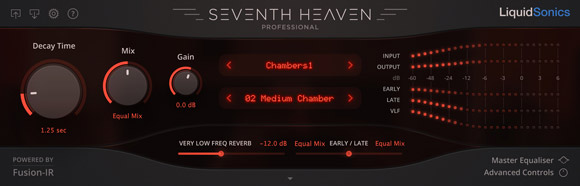
LiquidSonics Seventh Heaven
As we mentioned above when discussing convolution reverbs, Seventh Heaven – and it’s slightly more heavily-specified big brother version, Seventh Heaven Professional – takes its inspiration from the celebrated Bricasti M7 hardware reverb unit.
LiquidSonics have taken the M7 presets and made virtually indistinguishable recreations of them for you to pull up in plugin form. So if you don’t have the spare $4,000-odd for the hardware, you can pull up and tweak extremely similar modeled reverb presets, full of the air and subtle musicality which have endeared the original to many top engineers and producers, and which are so easy to apply to almost any instrument and fit naturally into a mix.
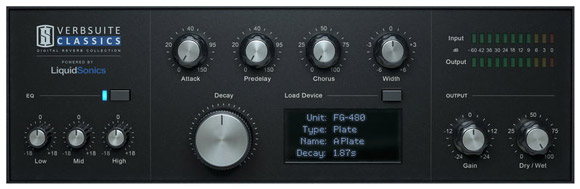
LiquidSonics also teamed up with Slate Digital to offer the VerbSuite Classics Digital Reverb Collection plugin, which fits well into the Slate range if you already use their plugins. VerbSuite Classics features 8 different models of favourite hardware reverb units, providing a potential one-stop shop for mixing duties.
Alternatively:
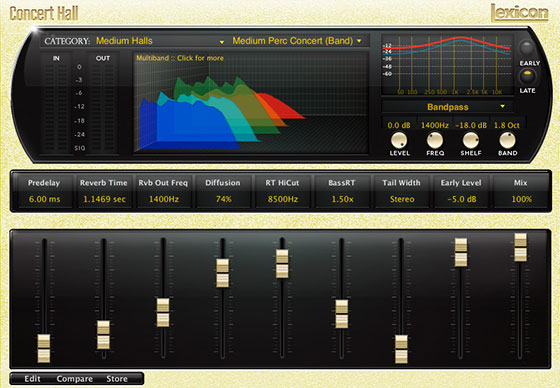
Of course, if you’re after the sound of classic studio reverb, the Lexicon PCM Native Reverb bundle plugins still very much hold up. We could virtually fill an entire category highlighting emulations of famed Lexicon hardware reverb units, with particular attention to the 224 and 480 models. However, this official software bundle version from Lexicon themselves uses the algorithms and presets from the more modern PCM96 hardware unit (the PCM series was originally conceived as a more streamlined live reverb option compared to the cumbersome 480L). While still the benchmark for “that Lexicon sound” in a native plugin format, there is a bunch of great competition, and if you’re in the market for a Lexicon-style reverb, which you consider to be the best will likely be based on a range of factors including price, format and interface style, as there is so little to choose between the sound of the top contenders. If the full PCM bundle is simply out of your price range, do also check out the Lexicon LXP bundle and MPX plugin for far more budget-friendly options.
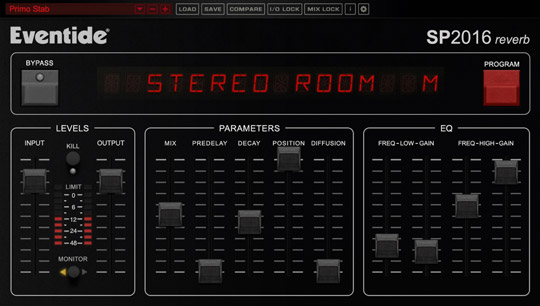
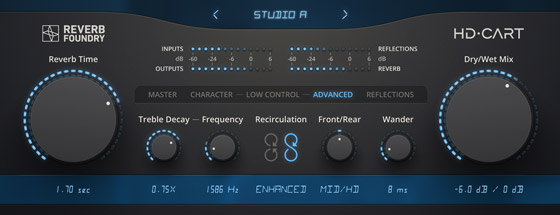
Further excellent alternatives to the Lexicons and LiquidSonics offerings include the ReLab LX480, a favourite of many producers, and the more recent Eventide SP2016 and Reverb Foundry HD Cart (modeling the Lexicon 480’s Surround Cartidge expansion), both of which are extremely high-quality reverbs and could represent exactly the sound and interface you want from a smooth, pro-sounding classic-modeled reverb. Universal Audio always deliver authenticity and incredible sound with their hardware emulations, and their take on Lexicon reverb with the UAD Lexicon 224 doesn’t disappoint, although of course you will need one of their DSP hardware units to support it. Native Instruments teamed with Softube for the RC24 and RC48 “Reverb Classics”, which are available individually but also of course included in the Komplete 10 bundle.
Also check out:
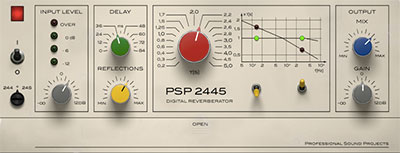 The PSP 2445 features emulations of the EMT 244 and 245 units, offering a welcome variation on classic digital reverb sounds beyond the Lexicons.
ValhallaDSP Room could already get remarkably close to the fabled Lexicon sound. With VintageVerb, which focuses more specifically on taking direct inspiration from the classic hardware with it’s nine algorithms, you get by far the best value Lexicon-style plugin.
7) Best Vintage Or ‘Character’ Reverb:
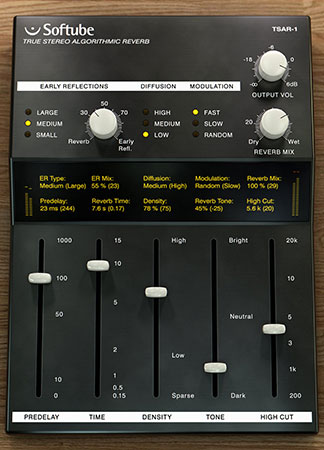
Softube TSAR-1
Several of the plugins on this list could arguably lay claim to this category, but special mention has to go to Softube’s TSAR-1. A point worth noting about the TSAR-1 is that, unlike the UA EMT 140 Plate for example, it’s not a straight ’emulation’ of any one piece of celebrated vintage gear. Rather, it takes the common characteristics of much of the best-loved classics, and brings them all together with a highly useable, somehow ‘authentic’ sound (if that’s not an oxymoron?), and a very cool interface. The best of all worlds, and perhaps an example of where more plugin designers will (hopefully) go in the future.
Also available in a slimmed-down version, Softube TSAR-1R: when you don’t need so many controls on hand and you just want something fast and CPU-friendly for spreading many instances across a mix, TSAR-1R can be just the thing.
BUY NOW via Plugin Boutique.
Also check out:
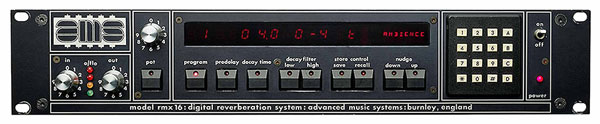
We’ve mentioned UAD reverbs in the digital reverb and plate reverb emulation categories, but we must also touch on the UAD EMT 250, their version of the very first electronic reverberator, and the UAD AMS Neve RMX16. The RMX16 plugin features the nine reverb programs of the original, the most famous being the Nonlin program that helped create the unmistakable 80’s gated reverb drum sound as used by Phil Collins and many more.
112dB Redline Reverb is not a vintage-style plugin exactly, but this reverb has as much character and warmth as anything out there. Maybe it’s because 112dB seem so good at bringing the warmth in general, with their very tube-sounding compressor, limiter and preamp plugins also being highly regarded. Developed by Martijn Zwartjes, who used to work at Native Instruments, the Redline Reverb’s first incarnations were the Rev-6 and Space Master ensembles for NI’s Reaktor.
8) Best Plate / Spring Mechanical Reverb Emulation:
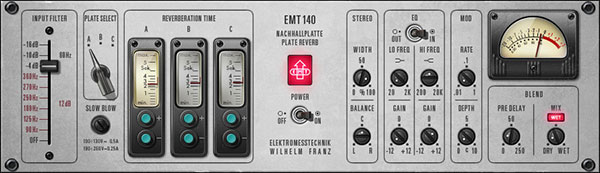
UAD EMT 140
Much like Lexicon being the king of digital algorithmic reverb, the EMT 140 reverb unit represents the pinnacle of the physical plate reverb sound. This large hardware unit was originally released by German phonograph manufacturers Elektro-Mess-Technik (EMT) in 1957, and quickly became a studio favourite, remaining in production for a further 25 years. Up until that point, the only reverb options for producers were to use spring reverb units (only really suitable for guitars), or to record or re-record tracks in an appropriately reverberant room, hall or custom-built chamber (inconvenient and/or expensive). The EMT 140 literally revolutionised studio reverb, not only offering a new level of convenience (a 7′ long, 600lbs box was of course considered amazingly convenient, relatively, at this time; imagine what a 1950’s engineer would make of plugin reverb..!), but also doing it with extreme style, providing the kind of lush, thick and diffuse reverb sound that is still revered today for it’s warmth and musicality.
Once again, Universal Audio nail it with the UAD EMT 140 Classic Plate Reverberator, an incredibly faithful emulation that is based on the combined emulation of three different original EMT 140’s.
Also check out:
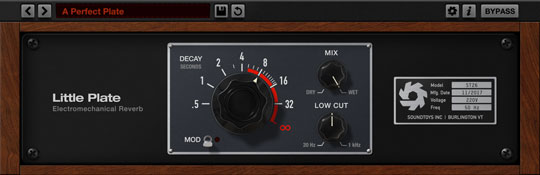
Soundtoys’ Little Plate also does a fantastic job of capturing the signature essence of a sparkly old electromechanical plate reverberator. With a single large dial for cranking up the Decay time, and simple Mix and Low Cut knobs for fast and furious sculpting of your reverb sound, Little Plate excels at providing depth and character with minimal time spent tweaking.
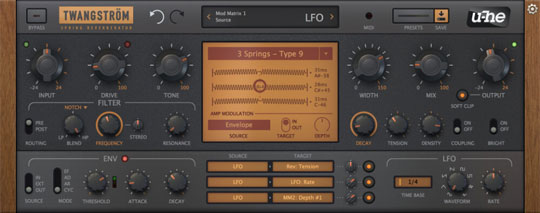 At the other end of the tweakability spectrum, check out u-he’s excellently named Twangström Spring Reverberator. Obviously, it’s modeling the character of spring reverb rather than plates, and it has a large range of parameters and fun extras for shaping and colouring, with three available reverb “tanks”, a drive section, filter stage, envelope, and mod matrix. If you’re familiar with u-he’s Bazille synth plugin, you’ll already have some idea of the character of this one, since that plugins spring reverb effect was the starting point for Twangström. A lot of fun, and massively flexible, whether you’re looking to accurately emulate jangly surf guitar amp reverb effects or add a rich and unusual atmosphere to synths, beats or vocals. Recommended!
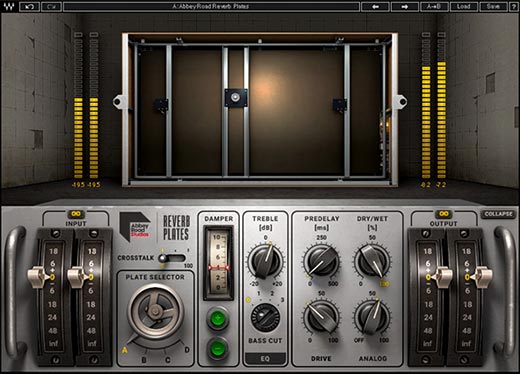 Waves Abbey Road Plates is also a long-time favourite character reverb of ours, while Valhalla DSP ValhallaPlate is another classy option, and a great complement to their other reverb plugins.
On the spring reverb front, Softube Spring Reverb is arguably the best spring reverb plugin available and is a huge amount of fun to use. There is also the more recent release of the UAD AKG BX 20. For lower budgets, we’d certainly also recommend the PSP SpringBox. Also not forgetting the CSR Plate Reverb in the IK Multimedia Classik Studio Reverb bundle.
9) Best Unsung Hero Reverb:
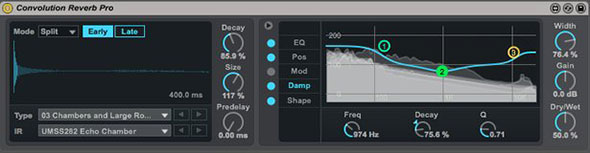
Your DAW’s Reverb
DAW developers continue to cram as much quality and processor diversity as possible into their offerings in order to get or stay ahead of the competition in a crowded market. This is great news for us producers, as the processors and effects now bundled with most DAWs as standard are not just stripped down versions or nominal, low-grade offerings merely there to fill out the spec sheet – they’re often at least as good as the third-party options (and in fact are sometimes based on acquired former third-party designs).
The best things about using the reverb plugins supplied with your DAW are that a) you don’t have to pay more, and you’re getting the most out of the investment you’ve already made, and b) they are likely to run that bit more efficiently within their host program than a third-party plugin might, having been optimized purely for that platform.
We’ve already mentioned some of the standout convolution reverb plugins bundled with DAWs, such as Logic Pro Space Designer, Ableton Max For Live Convolution Reverb Pro and FL Studio Convolver. There is also the Pro Tools native Reverb One, apparently based on the old favourite Wizooverb W2, as well as Avid ReVibe II. These are just a handful, but we’re pretty sure your DAW will have something to at least get started with too.
Update: new Ableton Live reverbs? Cubase? Check current versions of those listed above.
10) Best Reverb For Electronic Music:
D16 Toraverb
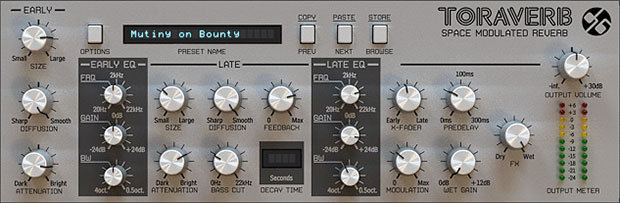
D16 are perhaps best known for their software versions of classic drum machines and the TB-303. Toraverb generates lush but suitably gritty, ‘punchy’-sounding reverb that is just what you need for all kinds of modern music.
For electronic music production, you generally want a healthy selection from all of the different categories mentioned above – there is obviously a big crossover here with sound design/FX-style reverbs, for example – but there are also some plugins that are undeniably essential for producers of electronic and dance music. D16 Toraverb stands apart in this respect, for its ability to cover all the bases with style, relative simplicity and ease of use, and the way it can be called on for everything from vibey classic plate or spring emulations to more out-there, sound design-oriented, abstract textures.
BUY NOW via PluginBoutique.Also check out:
Valhalla DSP’s VintageVerb and Shimmer; and 2CAudio Aether and B2 are both no-brainers here.

Valhalla VintageVerb has three different looks that correspond to the selected Reverb Mode: 1970s, 1980s and NOW
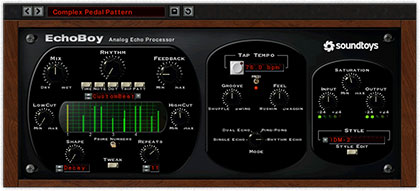
Beyond the reverb plugins we’ve already discussed, the excellent Soundtoys EchoBoy delay plugin may seem a left-field choice but does great atmospheric reverb, and should at any rate be in any space-obsessed producers arsenal – see more about this one in our 10 Best Delay Plugins In The World article.
That wraps up the best reverb plugins in the world today. As always, our aim is to provide you with a definitive and above all useful overview of your reverb plugin options in 2019, so that you can try out the ones that pique your interest and choose the very best and most appropriate tools for your productions. Leave your comments, thoughts and suggestions below!
And if you found this post useful, you’ll probably also be interested in this:
90 Comments
Nice =)
Real Glad you added space designer. :) put a smile on my face. Great write up btw. I enjoyed reading it. What about this fairly new reverb Aether that’s all the rave on the net atm? Any thoughts/experiences? I love VSS3 by tc electronics and offcourse the Lexicon PCM Native Bundle.
Josef Horhay
Mixing Engineer
http://www.acoosticzoo.com
Thanks I would really appreciate any help I can get
Sweet, that’s exactly what I was searching for! You just saved me alot of work
Subscribed to feeds Thanks
Excellent list…Does the list change now with the availability of Lexicon’s PCM and LXP plugins?
Hi…great site, I am hoping to get in touch with who runs this…
Kind regards,
Kelvin
http://www.loopmasters.com
Two that were not mentioned, but really should be are:
2CAudio’s Aether 1.5 – http://www.2caudio.com/
and
Acusticaudio’s Nebula3 Pro – http://www.acustica-audio.com/
Both are premium-grade reverb units and Nebula3 has huge extensibility with people like Signaltonoize making patches for it
http://www.rhythminmind.net/presetblog/category/samples/nebula-programs/
Lots of lovely choice!
Hey Dave C, thanks for the links – I havn’t tried any Acustica stuff yet, will get on it!
I just spent far more time than I should have browsing the rhythm in mind blog – I wish I could design my own plugins and sounds as simply as this guy seems to… :)
The EMT250 from UAD is the best of his category, whatever the way you classify it. As well the UAD EMT140.
Hey George, fantastic article. I was wondering if you have any suggestions for a good vintage spring-verb plug? Everything I’ve tried seems inauthentic. Looking for something that represents an Orban spring, or something like that.
Excellent writing man, really looking forward to there being more to come.
Cheers
Hey tuned in, thanks for the comments – yeah, there definitely is a shortage of good-sounding spring reverb plugins around.
I would suggest a couple of things: first, try the SIR reverb that I mention up top, and go to Noisevault where you can find a great selection of free IR files for download. In the ‘Springs’ folder, you’ll find a IR file from an Orban 111b Dual Spring…
If that’s not doing it for you, experiment with putting extra effects inserts on your reverb send channel – or in English, don’t use reverb clean, but put it through EQ’s, distortion, tremolo or other modulation effects. You can get much more subtle sounds and variations this way, which may go some way to achieving that ‘vintage’, ever-changing sound.
Try Outer Verb by Audiothing
nice post. thanks.
Great site. A lot of useful information here. I’m sending it to some friends!
You should write more on this topic. Just one quick word of advice, please check your page load time. It took me a little while to load.
Very nice ! This is what people need in order to find stuff what they need. Thanks a lot
Thank you with the facts, were looking several days and nights for this.
TNX, really..TNX
Hey there! Someone in my Facebook group shared this site with us so I came to look it over. I’m definitely enjoying the information. I’m book-marking and will be tweeting this to my followers! Excellent blog and great style and design.
It is almost unbeliveable that there is no even mentioned the most natural sounding reverb software 2CAudio Aether.
Aether outperforms all those reverbs in definition and smoothness with possibilities to render offline with unheard quality yet on the PC DAW’s. http://www.2CAudio.com
Don’t forget Image Line “Convolver” based on the same engine on Liquidsonic “Reverberate” a zero latency convolution plugin.
http://flstudio.image-line.com/help/html/plugins/Fruity%20Convolver.htm
http://www.youtube.com/watch?v=XzAmGtoswAE
Since you listed a few IR library sources, I thought to mention a free resource called the Open Impulse Response Library ( http://irlibrary.org ). Currently, it has over 220 IR files for free download. And the cool thing is, it’s open so anyone can upload their IR files. This might also mean that the IR files might not be the best quality. But like with anything in music “quality” is in the ear of the beholder :)
You have forgot the best plugin,its the Realverb 5.1 from Kind of Loud,its the best Surroundreverb for Protools ever!
Other good ones , not mentioned:
arts acoustic reverb
2caudio aether
lx480 relab.dk
d16 toraverb
softube tsar-1
softube spring reverb
ArtsAcoustic Reverb very good.
Pingback: A look at different reverb plugins « alycjones
I would like to mention Tone 2’s Warmverb as one worth checking out, that and Camelspace are my favourite 2 plug ins .
i’m amazed that there was no mention of bootsy’s epicverb for ‘best free algorithmic reverb’.
http://varietyofsound.wordpress.com/
Pingback: Audio Processing | Pearltrees
You forgot IK Multimedia’s, Classik Reverb, which is also quite special
Pingback: The 10 Best Reverb Plugins In The World « Computer Music Guide
I also second IK Multimedia’s Reverbs, cannot believe they did not make the list.
Now you can remove the lexicon from the category of most expensive reverb :)
Well, don’t know if their prices drop is a promo or will stand.
BTW, I missed CSR and Valhala on this list!
Thanks Walter: check out the update of this post
Lexicon, CSR and Valhalla all present and correct!
One of my all time favorites which I think has been discontinued for years is Sonic Timeworks Reverb. It sound so smooth on vocals and individual tracks.
Yes it’s a shame they’re no longer supporting anything other than their EQ plugin, it appears – was it the ReverbX you’re thinking of? I know it was a favourite for quite a few people.
What do you use now instead?
hey, STW P100 is not discontinued!
it’s now called SC-Plate and since sfp version 5.0 it’s included in Sonic Core’s Scope (ex-Creamware) as a bundled dsp plugin!
I always held Epicverb and Ambience to be the top free reverbs too, but lately Freeverb3 has dethroned them in my opinion.
Thanks for the comment, I’ll check out Freeverb3 :)
Very nice and useful article. Thank you very much!
And just to let you know, Minimal System Instruments are about to release a great looking plugin: Dreamscape – Reverb and space generator. I hope it will sound as good as it looks.
Also check out PSPaudio’s easyverb, Great sound great price and super easy to use.
Valhala became one of the my favorites. I need to test Waves Renaiscensse a bit more. And D16 plugins are in a promo on jrrshop. Man, how many things for a comment :)
I acquired your reverb guide. I really liked it a lot.
Hi Walter, really glad you’ve got into the Reverb and Compression Guides. Thanks for the support!
I can’t believe that the ReLab LX480 complete is not on this list! Really? Have you heard it at all? Lots of us have chosen this plug over the Lexicon PCM system. I have a LOT of the reverbs that are on your list (above) and only the Lexicon gives this one a run for its money in sheer quality and detail. It’s simply beautiful…
Nice recollection!
You missed Aether reverb tho… it could have its own categroy i think, the most Metaphysical!
http://www.2caudio.com/products/aether
Thanks Nemesis – you can actually see Aether in a recent 2013 update I did of this list, here.
Cheers!
Thank you for a great article and giving some great insights to a new producer. I would be interested in your opinion on the ReLab that Neil Wright mentioned as it is a lot cheaper than the Lexicon.
All the best
Tim
I’m surprised you didn’t mention 2C-Audio’s B2. A really cool verb imho.
Thank fro the article,
Mark
I’d put LiquidSonics ‘Reverberate’ over most of these, and they do a free ‘LE’ version.
I’d also suggest Variety Of Sound’s (Bootsy’s) ‘EpicVerb’ as the best free algorithmic
A little know yet awesome convolution reverb… Different from the rest because instead of using your CPU it makes use of your untapped graphics card’s GPU processing power. Awesome!!!
http://gpuimpulsereverb.de/
Thanks EL
Hi – surprised TC Powercore Classic Verb or VSS3 isn’t on the list…
Hi Ryan, I believe the Powercore DSP is discontinued now (I guess in favour of the System 6000 hardware?), but it appears you can still get the plugins for it, and VSS3 for TDM. I tend to concentrate here (for the most part) on the things that don’t require additional hardware/DSP, in favour of the best ‘pure’ software plugins. But definitely worth a mention, thanks!
Tc Electronic released native version of VSS3 3 months ago.max
Pingback: Experimental Media
the best reverb ever has been Wizooverb W2, by far, but because of that, M-audio bought it and made it secretly the new pro tools native reverb, shhh don´t tell anyone.
So if you turn to have it forget about looking somewhere else, use it and listen.
Thanks Dhruva, it’s also a good example of why it’s generally a mistake to overlook the plugins that come bundled with most DAWs – many of them would have been created or developed, somewhere along the line, by really good designers who have also had a hand in more ‘glamorous’ third-party plugins.
Also of note are the Softube ‘Reverb Classics’ made for Native Instruments aka. RC24 and RC48. Two great re-imaginings of popular Lexicon 220 and 480L Hall units. Really liking those!
Yes, good mentions! :)
Hi there. You should check out Silverspike’s two reverb plugins. They have the reverb plugin Reverb.it, and the more expensive room simulator R2. They are some of the smoothest reverbs I have used. I am not a pro at all, but I edit all of my high school’s jazz band performances at home. I use Reverb.it to add some space to a room that had dead acoustics.
Great forum, thanks a lot for the info. I want to put in a plug for voxengo’s free old school reverb. I have just tried this thinking it wouldn’t be that great but was very surprised how good it was. http://www.voxengo.com/product/oldskoolverb/
What about East West’s Spaces? Have you tried that one? It sounds like they put a lot of effort into it and I’m curious how it stacks up with some of your others.
Yes, EW Spaces is still one of the better ones.
Just to say thanks! Perfect categories, fun to read and exactly the summary I was looking for. Please write more like this!
So many good free algorithmic reverbs these days, I particularly like JB OmniVerb – just sounds good without much tweaking. Also Kjearhas Classic Reverb (I know it’s not spelled right!) is a good, quick workhorse for light lifting. And for Reaper users, I’ve found Reaverberate (not Reaverb, which is a convolution reverb) rarely gets mentioned, but the latest version is quite good and doesn’t suffer from a lot of the artifacts of previous versions.
IK Multimedia … amazing reverbs … ok
Love seeing two of my three favorite free VST reverbs make it to your list. The only one I’d also add myself is TAL-Reverb 2. Maybe it’s just great for the kind of music I make, but it’s has always been my goto (free) reverb.
Glad you appreciate the list, and thanks for adding another favourite to the discussion!
Cheers!
I’m surprised u haven’t mentioned Rp verb in this.
Its a beast..nd sounds sooo lush!!
A lot of great free of charge algorithmic reverbs nowadays, We especially such as JB OmniVerb – simply seems great without having a lot tweaking. Additionally Kjearhas Traditional Reverb (I understand it’s not really spelled correct! ) is a great, fast workhorse with regard to gentle raising. As well as with regard to Reaper customers, I’ve discovered Reaverberate (not Reaverb, the industry convolution reverb) hardly ever will get pointed out, however the most recent edition is very great as well as doesn’t are afflicted by many of the artifacts associated with prior variations.
Thanks.
The guy who wrote this article is not serious….
Everybody know Nebula reverb are the ultimate itb reverb weapon…
There is fucking good program very close to hardware.
The Waves IR1 is a pretty good convolution but you really have to take some time to get to know all the emulations to know exactly what you want. Plus it takes a few seconds to load each impulse. AVID Reverb One surprises me at how good and versatile it is. The Lexicon PCM verbs are good so is Altverb, and Wave Arts Master verb, But where is Sonnox Reverb, AVID Revibe and IZotope? I know Waves Abbey Roads Plates is new but it smokes most other ITB Reverbs.
Hi! thank you for an article! I would like to hear your opinion about what reverb is the best for church choirs?
The people of Overloud have SpringAge (lovely spring) and Breverb (useful multi)… Check to the addition of the list if you like it.
My favourite reverb is Altiverb. My second favourite reverb is Logic’s Space Designer. On the other hand, I would be willing to pay money to have Waves’ reverbs removed from all their bundles. Flowingly, it saddens me to see Waves making the top 10 (really, think about that for a while – top 10 in the world!) and not have the surprisingly versatile Space Designer mentioned at all (apart from the “Your DAW” which is a very odd category to make it into the Top 10). Anyway, I doubt that anyone will ever read this post, but if you do, take my advice and do as I do: bounce dry from Pro Tools, import into Logic and add the reverb, then bounce again and import into Pro Tools. I hate extra work, so this procedure says a lot about how much I like Space Designer. As with all reverbs, far from all settings are convincing, but the few that make the grade are totally incomparable to other reverb plugins, trust me.
I have almost every reverb under the sun. I work for Manny Marroquin. We used to use Renaissance and True Verb if not hardware (Bricasti M7 or RMX16). Then Mariah Carey came in for a session in 2013. She was very hands on, and when we were discussing where she wanted the mix to go, she complained about the reverb on her more recent records in 2000s being “bleak” but necessary since reverb did not make a big comeback in Pop music until a few years ago.
The mixers she was used to working with were using WAVES Renaissance and True Verb. On those classic records in the 90s, though, she was using a combination of Eventide’s 2016 Stereoroom, the 480L halls, and the RMX16 plates.
We spent three days trying to recreate that famous 90s vocal sound, but we wanted something slightly less muddy. We found perfection with a combination of the TSAR-1 “vintage” Ambiance, Altiverb’s chambers, and plates from Exponential Audio’s Phoenix Verb and R2. Almost all of the vocals contained three reverb sends with a small room first, a short plate second, and a longer hall third (and one or two for delays, using either Echoboy or PSP42). We also used Soundtoy’s Microshift. To hear them in action, check out “#Beautiful,” “Make It Look Good,” “Dedicated,” and “Supernatural.”
I was surprised not to see EA on the list, as it’s pretty much magic to the ears. It didn’t even require EQ’ing.
Thanks for the great insights Chris, and for listing the specific tracks for reference. We mentioned PhoenixVerb under point 5, perhaps we should add it to point 6 as well i.e. in the same breath as the Lexicons etc.! Cheers
Thanks for continuing to update this post with the most recent releases =]
An often overlooked Rev in apples own Matrix verb…
Seriously, f you ever want an algorithmic REV to have a Looong decay this is it!
I swear, its faultless…. Its Smooth and harmonically beautiful…
With wrappers such as Bluecat Patchwork, should be usable on any DAW on the Mac platform.
Flux IRCAM Verb Session is the best for natural rooms, and it doesn’t break the bank
SO, i know well some of the rvrb on the list and today i use all the time TL SPACE with Pro tools It seems Ircam verb is very powerful too!! Im the only guy to think Space ( with many IR package on website)is on the top or my hear have some problem?
AtomicReverb is my favourite. This has a fantastic wide range of usage! I’ve used this for small ambient rooms and also long decayed guitars and Fx… very natural and smooth. And it doesn’t break down my CPU ;)
I’d put Quantum Leap Spaces – Convolution reverb on that list for ease of us. Sure, you don’t get the amount of settings with the other ones, but man does it sound good on organic instruments like strings or piano. It’s beautiful…
I agree with the previous post… Quantum Leap Spaces is my go to #1 reverb. It’s absolutely gorgeous on vocals, piano, guitars, strings and sits in the mix perfectly. The churches and halls are my personal favorite and there’s one preset in particular I use on pretty much everything I do. I have a ton of reverb plugins and a really nice hardware unit but after getting Spaces they mostly sit unused.
I see nobody mentioned Verberate from Acon Digital
https://acondigital.com/products/verberate/
Eareverb2
I recently discovered that Melda Productions has made a long journey since I lost track of them, after downloading his freebies many years ago.
I was very surprised when I heard the MReverb that I bought for under 20 Dollars, and the MTurboReverb is one of the very few ITB reverbs that remind me of good hardware (it has a boldness that reminds me of the TC System 6000, for example). These are more than worth checking out!
Also outstanding is the new Relab TC VSR S24.
(For reference, reverb is crucial for me, and I own and use most of the “legendary” hardware reverbs, and many plugin reverbs. I do mainly acoustic music, from classic to folk and jazz to rock, so “epic” is not what I need every day. I like 2cAudio B2 for epic, but hardly ever use it.)
No Exponential Audio verbs? I thought this was ‘Best’ reverbs, this is a list of ‘Most Known Verbs’ not the ‘Best’.
VSS3!